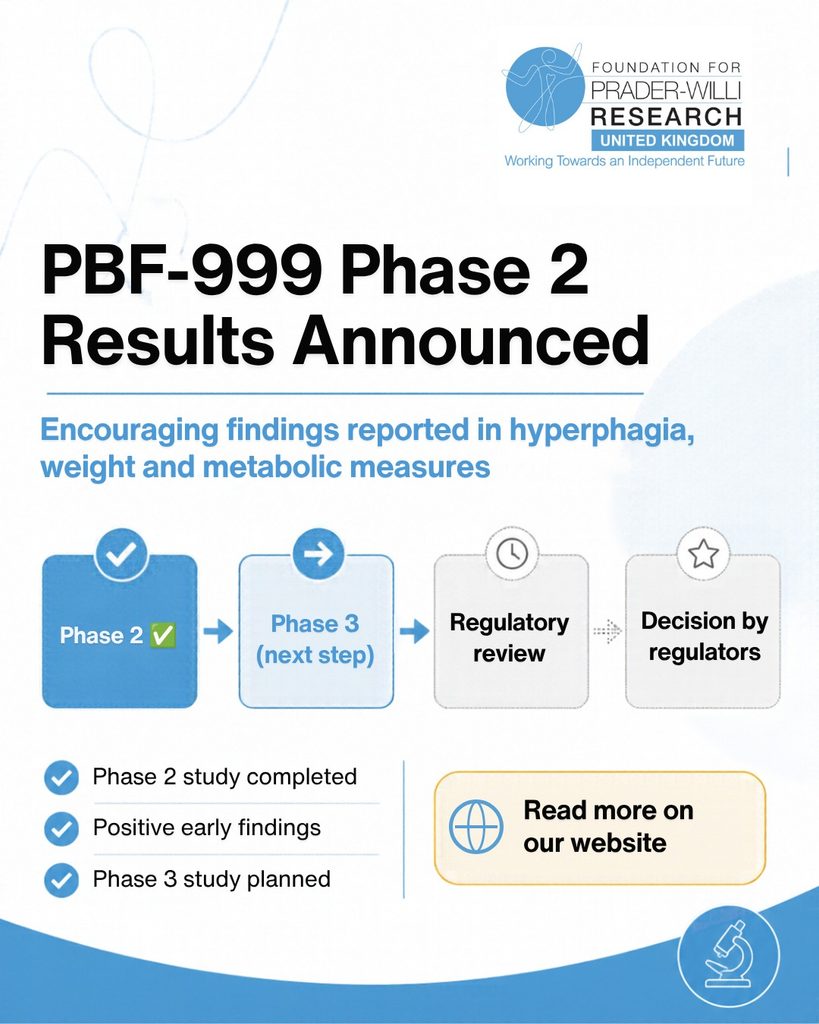
Research into new treatments for Prader-Willi syndrome (PWS) continues to move forward, with Palobiofarma recently announcing encouraging results from a Phase 2 clinical trial of its investigational treatment, PBF-999. The findings were presented at the annual Foundation for Prader-Willi Research (FPWR) Research Symposium and have led to plans for a larger Phase 3 clinical trial.
What Did the Study Find?
According to Palobiofarma, participants receiving PBF-999 showed improvements compared with placebo (dummy drug) in several important areas, including:
Hyperphagia (the drive to eat and food-related behaviours) Body weight, other measures related to metabolism and energy use by the body
The company reported that these findings were statistically significant and that continued treatment was associated with further positive changes during the study.
What Is PBF-999?
PBF-999 is an investigational medicine being developed specifically for people with Prader-Willi syndrome. It works differently from many other treatments currently being studied.
Researchers are investigating whether PBF-999 can affect pathways in the brain involved in hyperphagia and food intake, while also influencing the body’s energy metabolism. The hope is that this approach could help address not only hyperphagia, but also some of the weight and metabolic challenges associated with PWS.
While the science behind the treatment is complex, the key takeaway is that PBF-999 represents a different approach to treating some of the most challenging aspects of PWS.
What About Safety?
Palobiofarma reported that PBF-999 had a manageable safety profile in this Phase 2 study. Severe treatment-related side effects or side effects leading participants to stop treatment were reported to be uncommon and resolved without lasting problems.