We’ve recently seen questions and concerns on social media about the status of VYKAT® XR (diazoxide choline, previously known as DCCR) in Europe. We wanted to share a factual summary of what we know from publicly available information from the European Medicines Agency (EMA) and FPWR UK’s discussions with Neurocrine Biosciences.
A Quick Reminder of the Development Journey
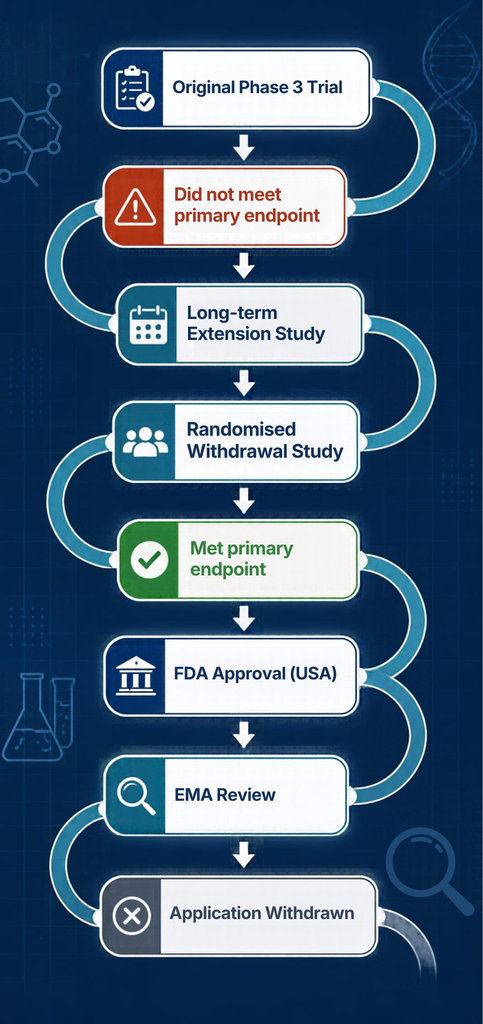
Many families will remember that the original Phase 3 clinical trial for DCCR did not meet its main (primary) endpoint. This was an important challenge because regulatory agencies such as the FDA and EMA generally expect medicines to demonstrate benefit against their predefined study goals.
Because of this, additional evidence was generated through a long-term extension study followed by a randomised withdrawal study. The purpose of the withdrawal study was to help answer an important question:
If people who have been benefiting from the medication stop taking it, do their symptoms worsen?
Participants who had received DCCR for an extended period either continued treatment or were switched to placebo for 16 weeks. The study found that people removed from treatment experienced a worsening of hyperphagia compared with those who remained on DCCR. This study met its primary endpoint.
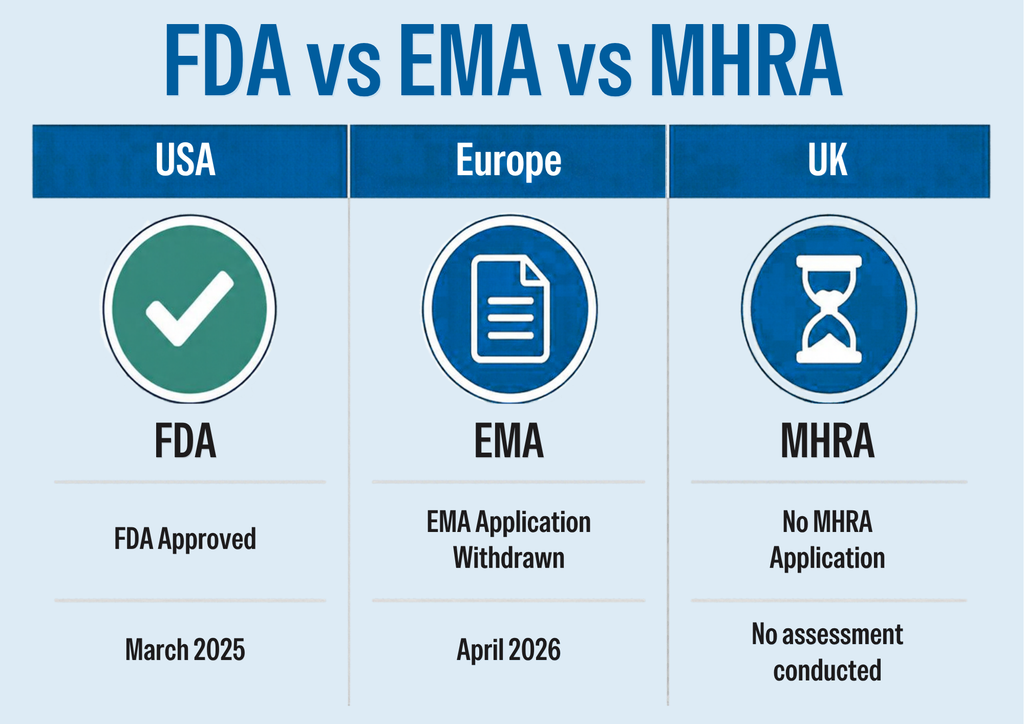
The data from this programme ultimately formed part of the evidence reviewed by the U.S. Food and Drug Administration (FDA), which approved VYKAT® XR in March 2025.
What Did the EMA Say?
It is important to remember that regulatory agencies around the world do not always make decisions in the same way. While they all aim to ensure medicines are safe and effective, they may place different emphasis on aspects of the evidence. This means that data considered sufficient by one regulator maybe seen as insufficient or lead to a request for additional information by another.
The EMA acknowledged that the first study did not meet its primary endpoint, while the second study did meet its primary endpoint.
However, the EMA also stated that it had concerns that the participants in the second study represented a “highly selected” group and that there were concerns relating to the study design. The Agency’s view was that the available evidence was not sufficient at that stage to demonstrate effectiveness.
When the EMA refers to a “highly selected” population, it is referring to the fact that participants in the withdrawal study had already:
- completed the original study;
- entered the long-term extension study;
- remained on treatment for an extended period; and
- continued into the withdrawal phase.
In other words, the withdrawal study did not involve a newly recruited, broad PWS population. It involved individuals who had already participated in earlier stages of the clinical programme. The EMA considered this when assessing how widely the results could be applied.
What About the Nitrosamine Impurity Concerns?
Some rumours circulating has suggested that harmful impurities were found in DCCR. This is not what the EMA stated.
As part of its review, the EMA raised questions relating to the potential formation of nitrosamine impurities. Nitrosamines are a group of substances that regulators carefully monitor because some have been associated with an increased cancer risk when present above certain levels over long periods of time.
The EMA stated that, based on the information available during its review, it was not possible to rule out the formation of nitrosamine impurities, and therefore this remained an outstanding concern at the time of withdrawal.
However, the EMA did not state that harmful levels of nitrosamines had been identified in the medicine, nor did it conclude that patients had been harmed by nitrosamine exposure.
It is also important to note that the company had submitted responses to the EMA’s final round of questions before the application was withdrawn. According to the EMA, the application was withdrawn before the Agency completed its assessment of those responses. As a result, no final conclusion was reached regarding the information submitted in response to the Agency’s outstanding questions.
Was the EMA Review Finished?
No.
According to the EMA, questions were raised during the review process, and responses were submitted by the company. The application was withdrawn before the EMA completed its assessment of those responses.
This is important because the review process was not completed and therefore no final opinion was reached on those later responses.
Why Was the Application Withdrawn?
The EMA records that the company withdrew the application following the preliminary assessment by the Committee for Medicinal Products for Human Use (CHMP), which had concluded that the data available at that time were not sufficient to determine that the benefits outweighed the risks.
Following Neurocrine Biosciences’ acquisition of Soleno Therapeutics, FPWR UK sought clarification and were assure that the withdrawal was a “strategic and business decision”. Regarding future plans, Neurocrine has informed us:
“As the acquisition of Soleno by Neurocrine Biosciences was completed on May 18, we are now evaluating our strategy for VYKAT® XR (diazoxide choline) extended-release tablets outside of the United States. We don’t have a definitive answer at this time, but we are committed to sharing updates with the PWS community as soon as we have more information.”
At present, no timeline has been announced for any future European regulatory submission.
What We Know Today
✅ VYKAT® XR is approved in the United States.
✅ The EMA acknowledged that the randomised withdrawal study met its primary endpoint.
✅ The EMA also expressed concerns regarding the overall evidence package, including the highly selected study population and study design.
✅ The EMA raised additional questions regarding the potential formation of nitrosamine impurities which remained unresolved at the time of withdrawal.
✅ The EMA review was not completed because the application was withdrawn before assessment of the company’s final responses could take place.
✅ Neurocrine has stated that it is evaluating its strategy outside the United States but has not announced future timelines.
Final Thoughts
The current situation is understandably frustrating for families who have followed the development of DCCR/VYKAT® XR over many years.
What we know is that VYKAT® XR remains approved in the United States, that the EMA review identified both positive and negative aspects of the evidence package, and that the European review process ended before a final assessment of the company’s latest responses could take place.
While there is currently no announced timeline for any future European submission, Neurocrine has not stated that it has ruled out pursuing markets outside the United States. FPWR UK remains in contact with the company and will continue to share factual updates with the community as more information becomes available.
It is also worth noting that DCCR/VYKAT® XR has not been reviewed by the MHRA, the UK’s medicines regulator. As a result, there has been no UK-specific regulatory assessment or decision regarding the medicine.
Further Information
Families who would like to review the EMA’s published information directly can do so here:
EMA Viokat page Viokat | European Medicines Agency (EMA)
The EMA page includes details of the studies submitted, the Agency’s assessment at the time of withdrawal, and links to the withdrawal documentation published by the EMA.