For families living with Prader-Willi syndrome (PWS), the relentless drive to eat is a well-known and daily struggle. A key area of PWS research is focusing on how to help this cruel symptom, and we are excited to hear about a study right here in the UK. At the University of Bristol, researchers are exploring a ground-breaking approach of using gentle, non-invasive brain stimulation to help improve the way appetite is regulated. This innovative project, funded by FPWR, is shining a light on new possibilities that could one day ease one of the toughest aspects of life with PWS.
Why Appetite Regulation Matters in PWS
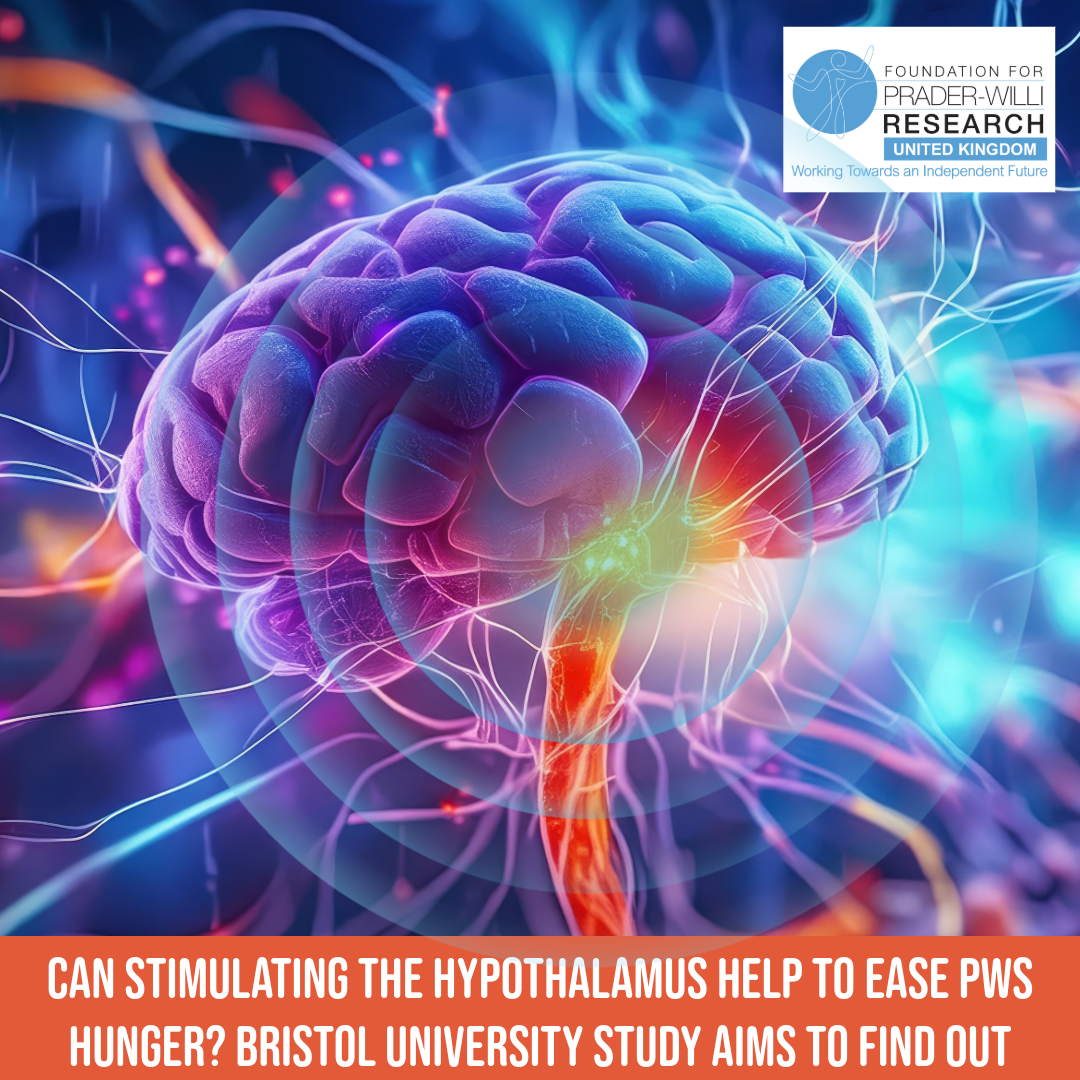
Deep inside the brain lies a small but powerful region called the hypothalamus. This area acts like a control centre for many body functions, including hunger. If the hypothalamus isn’t working properly, the signals that tell us “I’m full” don’t get through.
A key player in this process could be a protein called BDNF (Brain-Derived Neurotrophic Factor). BDNF helps brain cells grow and communicate, and it also plays an important role in controlling appetite. Studies have shown that people with PWS often have lower levels of BDNF, which may contribute to their difficulties with satiety (the feeling of being full).
A New Approach: Ultrasound Stimulation
Dr. Whitcomb and his team at Bristol University are testing whether ultrasound technology—the same kind of safe sound waves used in medical imaging—can be used to gently stimulate the hypothalamus in rodents. The idea is that this stimulation could increase BDNF production in the brain, helping restore healthier appetite signals. If successful, this approach could open the door to new, non-invasive treatments for people with PWS.
What This Could Mean for Families
While this research is still at an early stage, the potential impact is huge. Imagine a future where safe, painless brain stimulation could help individuals with PWS feel satisfied after meals. That would mean less anxiety around food, fewer behavioural challenges, and a better quality of life for both individuals and their families.
This research at the University of Bristol represents a bold step toward tackling one of the most difficult aspects of life with Prader‑Willi syndrome. While there is still much to learn, the dedication and creativity of Dr. Whitcomb and his team give real hope for the future.
Also, none of this work would be possible without the incredible support of the PWS community and beyond. Every fundraiser, every donation, and every act of advocacy helps turn promising ideas into real scientific progress. Together, families, researchers, and supporters are driving change that could one day transform the daily experience of those living with PWS